Do you have "Nickel Itch"?

According to MayoClinic.com, "nickel is one of the 10 most
common causes of allergic contact dermatitis."

The itchy rash, and sometimes blisters, can appear as much
as two days after exposure. Like all allergies, it gets worse
with exposure. And once you have a reaction, you will
continue to have problems.

Women are as much as 30 times more likely as men to have
allergic reactions because nickel is so prominent in jewelry,
such as pierced earrings.

Because of the increasing problems with Nickel allergies, the
European Union imposed a ban on nickel ban in jewelry sold
there. Yet the needles made in England are still nickel plated.

If you have a reaction after you wear earrings, or from your
watch, zipper, buckle, or rings, you may be allergic to nickel
and will want to avoid all nickel plated items.
How traditional needles are made:
  1. Steel is made into wire.
  2. The wire is straightened and cut to pieces equal to the
    length of 2 needles.
  3. Points are ground onto each end of these pieces.
  4. Two holes are stamped in the middle of the wire to make
    two eyes.
  5. The two needles are separated.
  6. The eyes are cleaned in a process known as cheeking.
  7. The needles are then hardened and  tempered.
  8. Burrs are removed and the needles are polished.
  9. The needles are then plated in nickel to prevent rusting
    and make them shiny and smooth.
  10. Video below is from EnTaCo Needle Company of England
©2007 PST Innovations, LLC. all rights reserved  .
The Spiral Eye Needle logo and name are owned by or registered to PST Innovations LLC..  
P.O. Box 49605 Blaine, MN 55449  
How Spiral eye needles are made
Sorry, that's a secret. But I will tell you it takes even more
steps and specialized equipment than the traditional needle
making process.

It isn't as simple as just cutting an eye into an existing
needle. The material it is made from, as well as the process
of making it had to be reinvented.
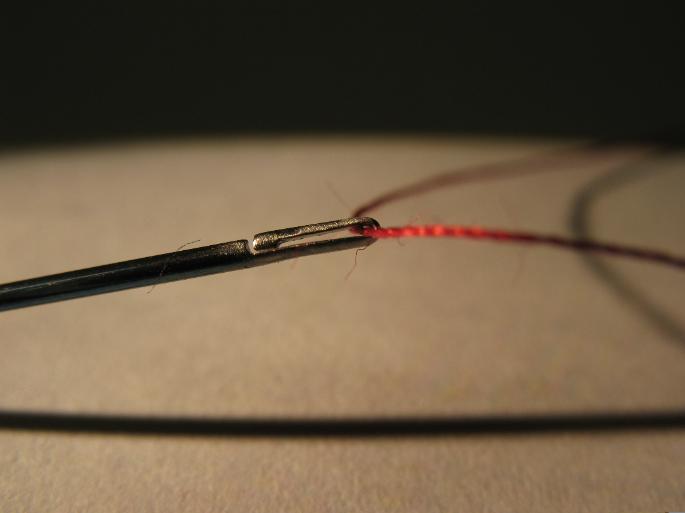
closeup photo of first version of the Spiral Eye sewing needle
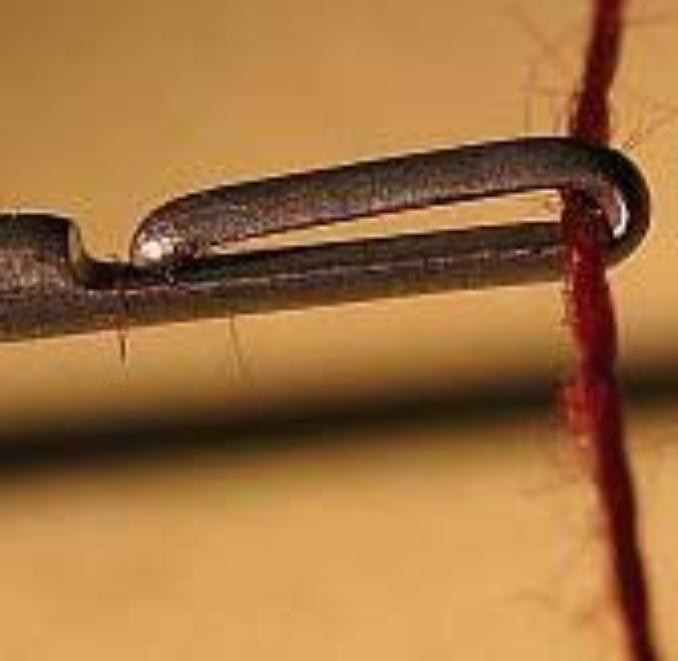
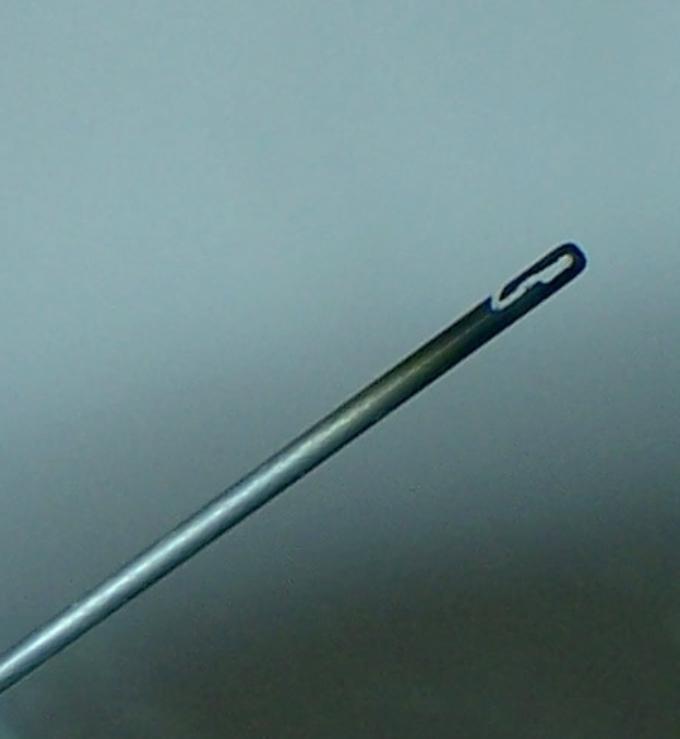
Below are closeup pictures of various
prototypes for the Spiral Eye Needle.
early prototype of spiral eye needle
close up of the first working prototype Spiral Eye Needle
needle threading tool
Why...

were there so many gadgets
out there to thread a needle,
yet no one stopped to say, wait
a minute, it isn't me that has a
problem, it is the design of the
needle?
USES:

Beading

Bury threads

Cross stitch

Dolls

Embellishment
Embroidery

Fish baiting

Hand sewing

Hardanger

Hemming

Lace making

Mending

Needle crafts

Needlepoint

Paper sewing

Quilting

Repair snags

Scrap booking

Tapestry    
Spiral eye needles are child's play.

Everything in this picture was made using a Spiral Eye Needle.

The Size 4/22 embroidery is the perfect starter needle for
younger users. They can punch holes in the shape of the
letters of their name, and then embroider through those same
holes with bright colors.

Learning to sew buttons onto a piece of material is a great life
skill every child should learn. The size 4/22 needle, will go
through most button holes and basic cotton materials with
ease.

The size 4/22 embroidery needle works especially well with
wide weave material, like 14 count. Aida, and is able to hold up
to six strands of embroidery floss. (You do have to thread it two
or three threads at a time, but the eye will hold six.)

The sock monkey project was done with the size 24
embroidery needle.

Beading necklaces made from noodles or shells is always a
good time.

The yarn needle used in the threading bear is a size 13.
A sock monkey and othe projects made using spiral eye needles
Spiral eye
side threading needles
SPIRAL EYE EASY THREADING NEEDLE
TM
patent pending
All about needles
Needle threaders are great, if you can find the eye to put the
thin metal wire into it. And if you can keep track of where the
threader is. And if you have a needle with an eye big enough
to pull a double piece of thread through it.